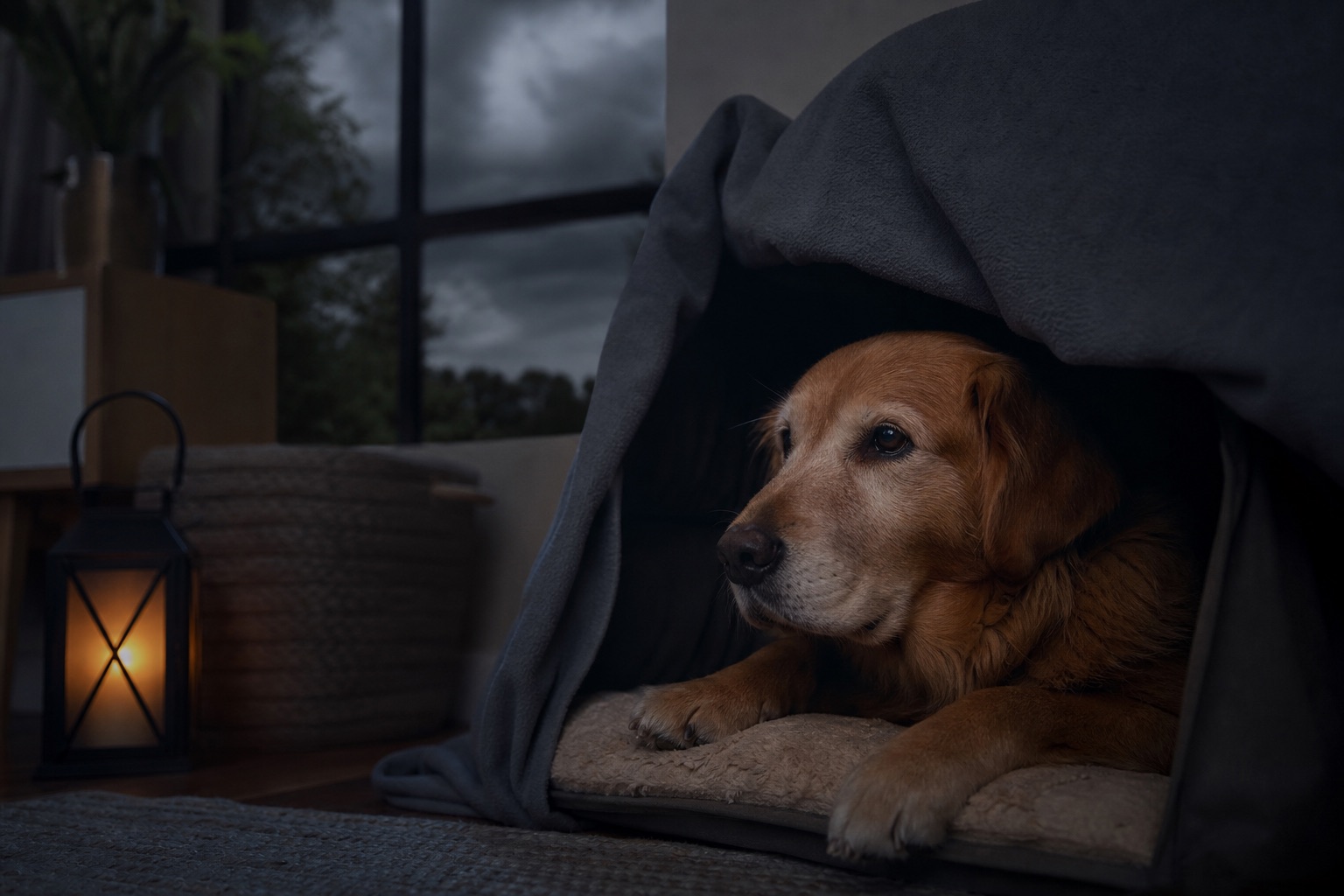
Noise phobia is an intense fear response to sounds such as thunder, fireworks, alarms, or construction. Panting, pacing, hiding, trembling, drooling, destruction, escape attempts, and house-soiling can all occur. The VCA guide to fear of noises recommends a safe setup and professional help for extreme cases.
Do not force a dog to “face” the sound or punish the response. During a storm or fireworks event, the immediate goal is safety and reduced distress. Training happens later, in controlled conditions.
Recognizing noise phobia
A dog may start reacting before the sound begins if weather changes, fireworks are visible, or a familiar pre-event cue predicts the noise. Watch for trembling, panting, pacing, hiding, drooling, frantic attachment, escape behavior, destruction, or refusal of food.
Fear can worsen over time if every exposure becomes a panic rehearsal. Early support matters.
Prepare before storms or fireworks
- Check fences, doors, windows, and identification information.
- Create a quiet interior retreat with bedding and water.
- Close curtains and windows to reduce flashes and sound.
- Use steady background sound if your dog finds it calming.
- Walk and toilet before the event, then keep the dog leashed outdoors.
- Keep the dog indoors and supervised; do not leave a panicked dog in a yard.
Let your dog choose whether to use the retreat. Do not trap the dog in a crate if confinement increases panic; ask a professional about the safest setup.
What to do during the noise
Stay calm, reduce sound where possible, and offer contact if your dog seeks it. You cannot reward fear into existence. If food is accepted, scatter treats or offer a safe food toy; if food is refused, stop asking for behavior and focus on safety.
Do not drag the dog toward a window, force play, shout, or use punishment. Never give human medication or leftover sedatives. Ask your veterinarian about medication options before the next event; AAHA's noise-aversion guidance emphasizes veterinary planning for severe cases.
Plan for the next predictable event
Write down the sounds that trigger your dog, the earliest warning signs, and the safest retreat. Check identification, doors, windows, fencing, and leash equipment before storm or fireworks season rather than during the panic. Tell household members that the dog is not to be taken outside off leash, approached by children, or forced to interact while frightened.
If the dog bolts, self-injures, cannot eat, or remains distressed long after the sound ends, do not wait for another event to test a home remedy. Arrange veterinary and behavior support in advance. A plan may combine environmental management, gradual training, and veterinarian-prescribed treatment; medication choices and timing are individual and must not be improvised.
Noise phobia is different from ordinary leash pulling or a dog who barks at another dog on a walk. If the sound is only one part of a wider trigger pattern, use the appropriate behavior assessment rather than treating every reaction as a noise problem.
Gradual sound desensitization
Outside the event, use a reliable recording at a volume where the dog can remain relaxed and take food. Play it briefly, pair it with something good, and stop before the dog shows stress. Increase intensity slowly and only when the current level is easy.
If the dog stops eating, scans, hides, or tries to escape, reduce the volume or end the session. Do not practice during a real storm when you cannot control the intensity.
When to contact a vet or behavior professional
Get veterinary help for sudden noise sensitivity, severe panic, injury, escape attempts, or a dog who cannot recover after the sound ends. Pain and other medical problems can change sound sensitivity. A veterinary behaviorist or qualified behavior consultant can combine management, gradual training, and veterinary treatment when needed.
Help the dog recover after an event
Keep the retreat available after the storm or fireworks finish. Offer water, a quiet toilet break on leash, and rest. Do not immediately expose the dog to another loud sound to “prove” it is over the fear. Note the trigger, earliest signs, escape attempts, and what helped so the next veterinary or behavior consultation is specific.
If the dog is missing, injured, or has escaped, contact local shelters and animal-control services promptly and use the identification information you checked before the event. Prevention is easier when doors, gates, microchip details, and current identification are reviewed ahead of time.
Avoid last-minute exposure training
A real storm or fireworks display is too intense and unpredictable for first lessons. If an event is approaching, focus on management and ask a veterinarian early about options for a dog with severe fear. During training, the sound must stay low enough that the dog can remain relaxed; raising the volume because the dog has “heard it before” can undo progress.
Start before the calendar event
Prepare weeks ahead when possible. Check identification, practice entering the retreat, and ask your veterinarian about severe reactions before a storm or fireworks night. On the day, use management first and do not test the dog's tolerance. A plan made during calm conditions gives the dog and household more options.
Do not measure courage by proximity
A dog who stays still near a loud sound may be frozen rather than calm. Look for relaxed movement, normal breathing, recovery, and the ability to choose food or distance. If those are absent, reduce exposure and prioritize safety.
FAQ
Should I comfort my dog during fireworks?
You can calmly support a dog who seeks you and provide a safe retreat. Comfort is not the same as forcing interaction or amplifying the event.
Do thunder shirts or supplements cure noise phobia?
Some dogs may find pressure or environmental changes helpful, but no product should replace a safety plan and veterinary assessment for severe fear.
Can I play fireworks sounds to train my dog?
Only at a very low, tolerable intensity outside the event, with gradual desensitization. Stop if the dog shows stress.
Why did my adult dog suddenly become afraid of thunder?
New fear can have behavioral or medical contributors. Arrange a veterinary evaluation rather than assuming the dog is simply becoming difficult.
Related guides
- Why dogs dig and how to stop it — assess sudden digging around storms, fireworks, or escape routes.
- Why do dogs howl?
- Dog body language and calming signals
- Reactive dog training