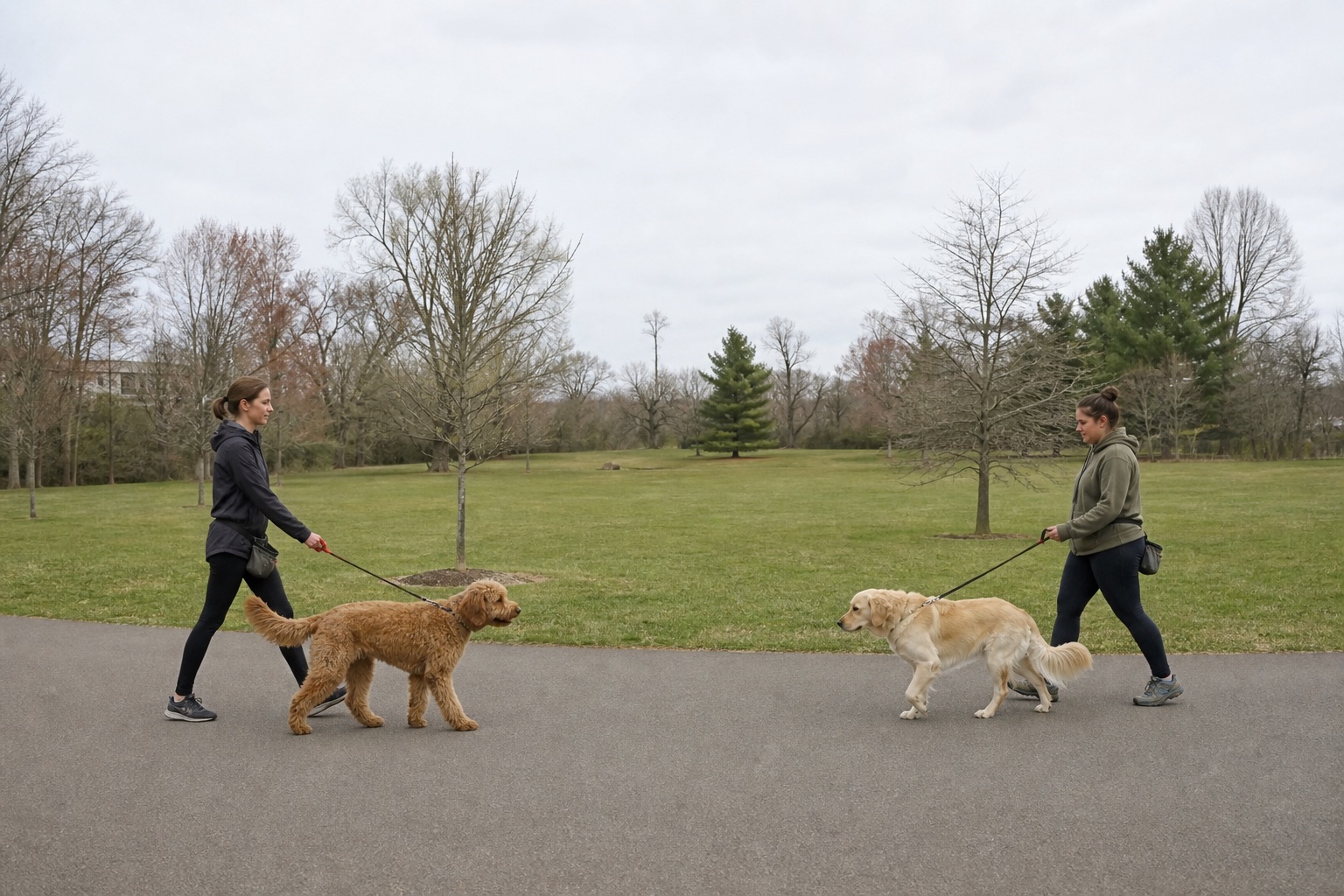
Reactive Dog Training: A Step-by-Step Plan to Calmer Walks
A structured, force-free plan for reactive dogs — how to find your dog's threshold, work through it in phases, and know when a walk problem needs professional help.
A dog who lunges at another dog on the pavement, panics at fireworks, or cannot be left alone is not being difficult. They are over threshold, which means the thing they are reacting to is closer, louder or longer than they can currently cope with. Every guide in this pillar works the same way: find the distance where your dog can still think, and work there.
That principle is why progress here is measured in successful walks rather than in weeks. If a plan stops working, the usual cause is that the distance shrank, not that the dog stopped learning.
6 guides in this category
A structured, force-free plan for reactive dogs — how to find your dog's threshold, work through it in phases, and know when a walk problem needs professional help.
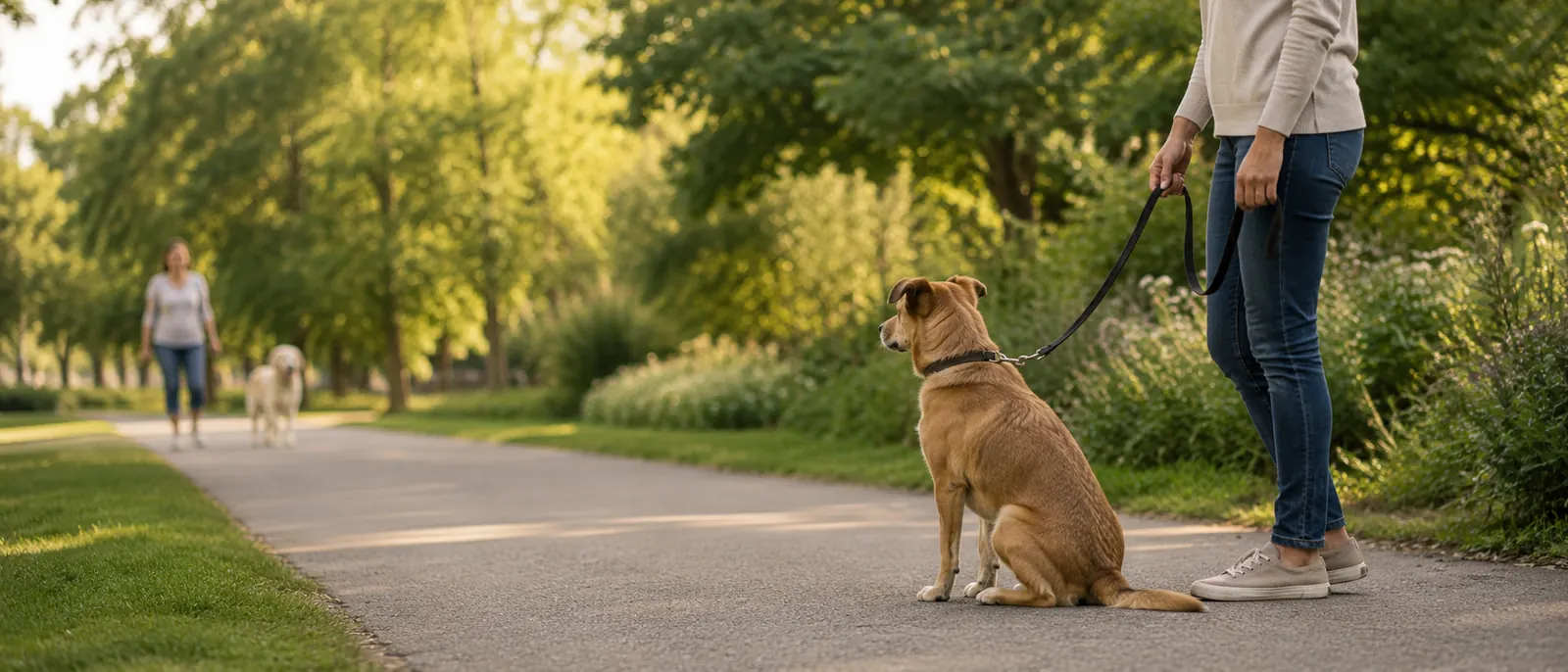
A practical loose-leash walking plan: teach your dog where the leash works, reduce pulling without pain, and build calm walks around real distractions.
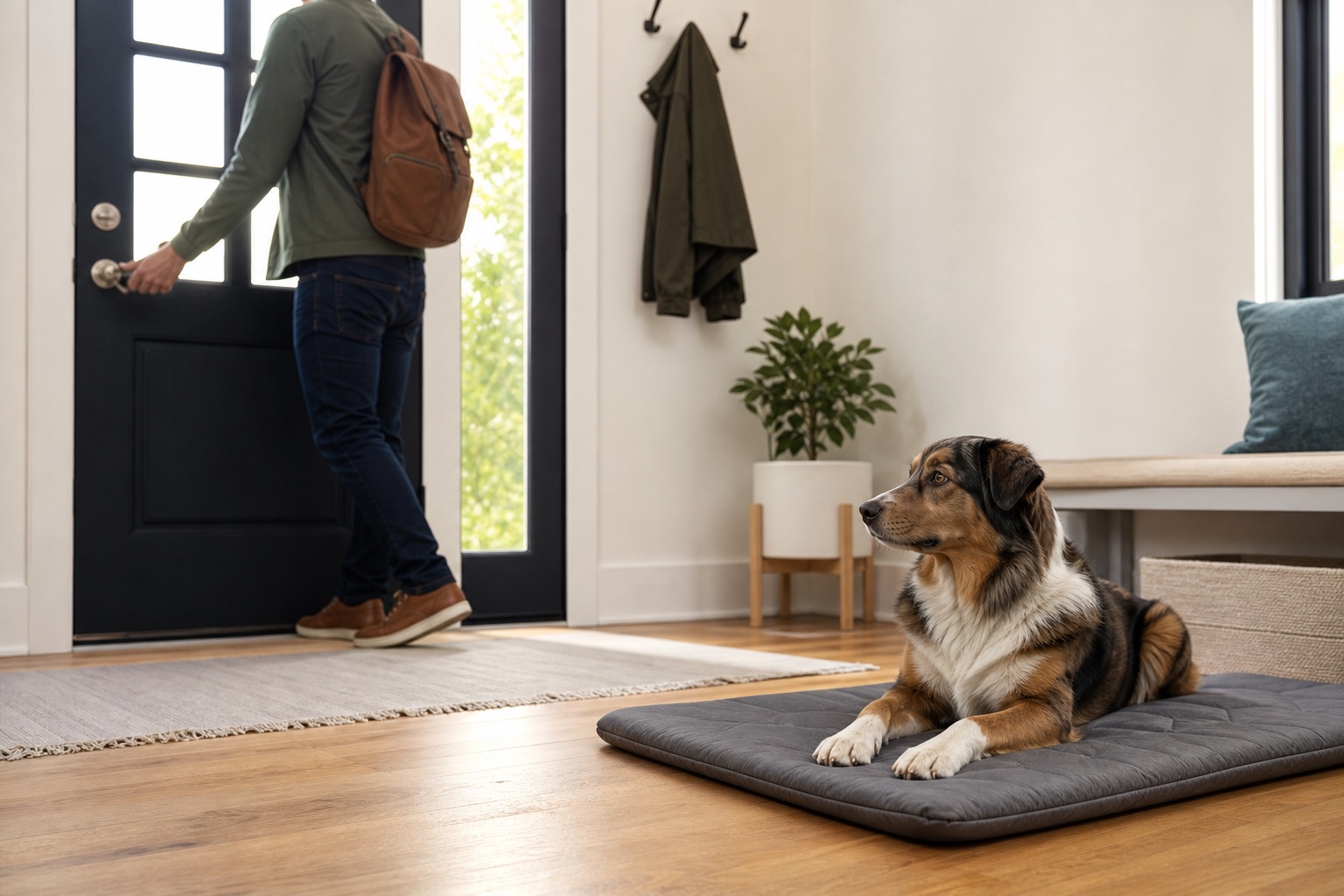
Learn to recognize separation anxiety in dogs, prevent panic during absences, and build alone-time gradually with management, video observation, and veterinary support.
Learn how to introduce dogs with distance, parallel movement, loose body language, and calm management—whether meeting on a walk or bringing a dog home.
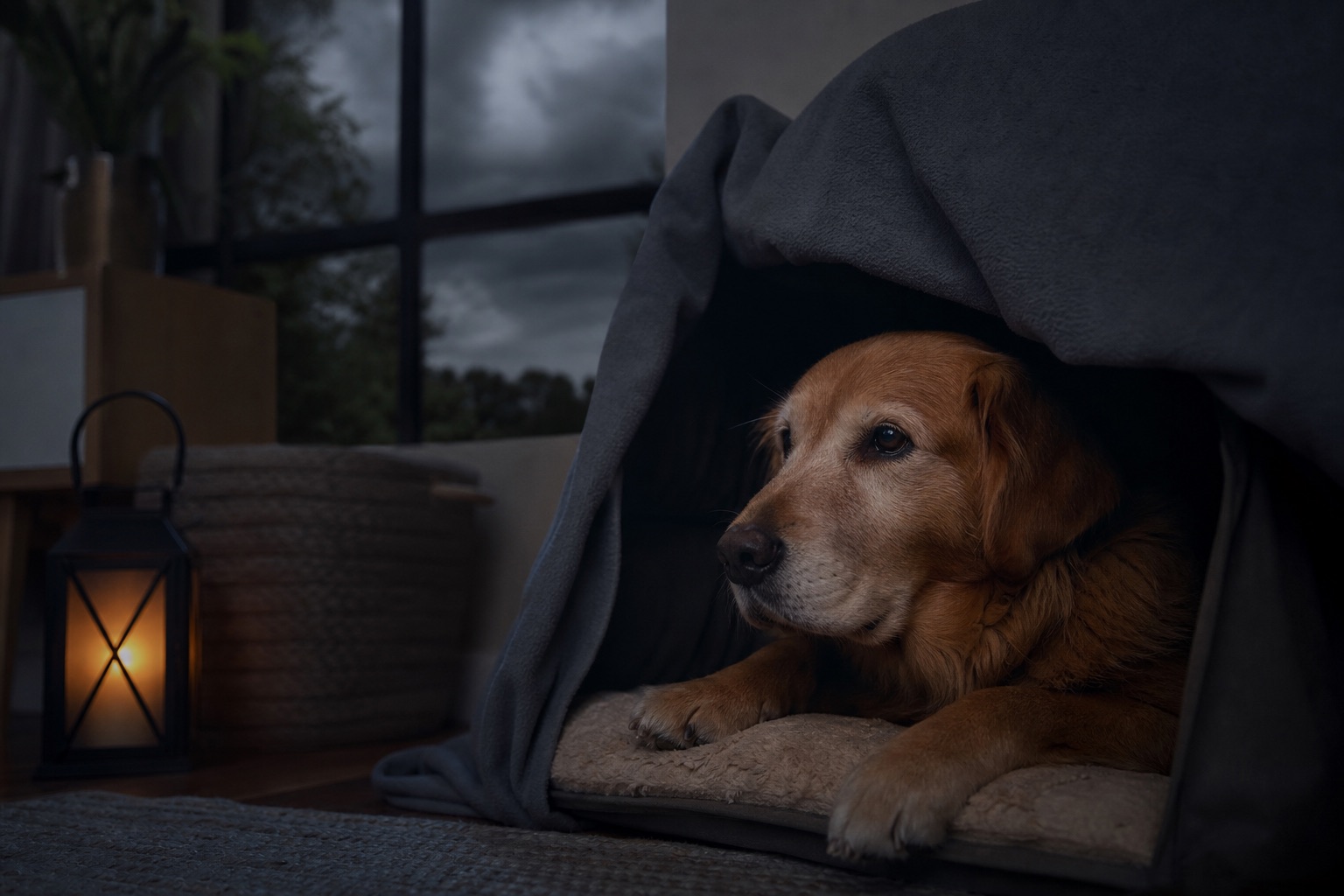
A safety-first guide to dog noise phobia: prepare for storms and fireworks, create a safe retreat, and use gradual training and veterinary support when needed.
A step-by-step plan for shy and fearful adult dogs: map what frightens them, stop the exposures that make it worse, then build confidence gradually and measure real progress.
Every PupperGuide article sits in one of six categories.