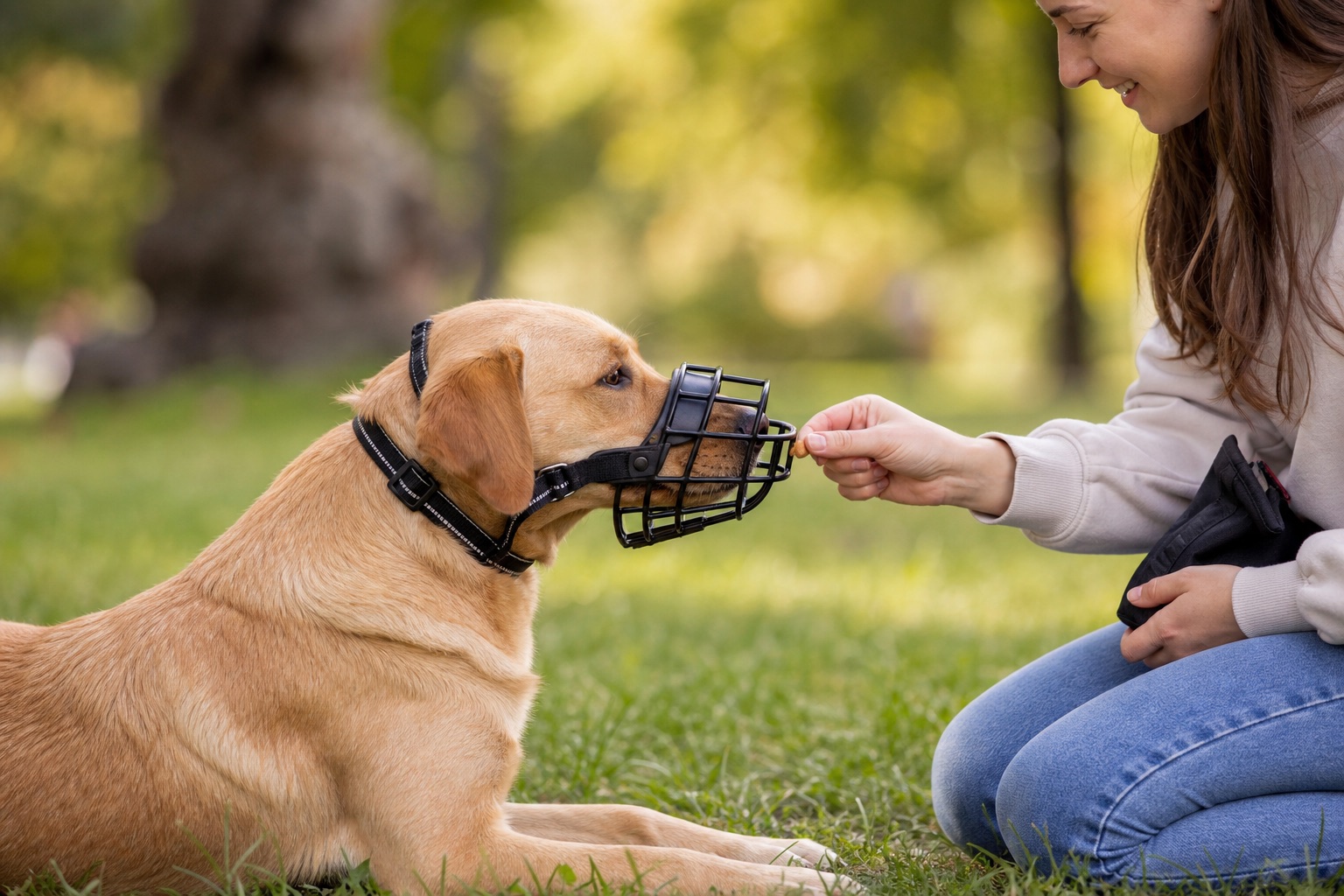
Muzzle training teaches a dog that placing its nose into a basket muzzle predicts good things. Go slowly: show the muzzle, reward looking at it, reward a nose touch, build brief duration, then add the straps. Cornell's basket-muzzle training guidance supports a gradual, treat-based progression.
Use a basket muzzle that fits comfortably and allows panting, drinking, and treats. The AKC muzzle guide emphasizes supervision and short, appropriate use. Never use a muzzle to ignore a bite-risk plan.
Why dogs may need a muzzle
Muzzles can help during veterinary handling, grooming, public-management requirements, transport, or carefully planned behavior work. They can protect people and reduce the chance of scavenging or biting, but they do not change how a dog feels.
If a dog has bitten, snapped, lunged, or guarded around children, involve your veterinarian and a qualified behavior professional. Muzzle training should support a broader safety plan, not replace it.
Choose the right muzzle
A basket muzzle is usually more suitable for longer, supervised wear than a tight fabric muzzle because the dog can pant and drink. Fit matters: the dog should be able to open the mouth, breathe freely, and take a treat without the muzzle rubbing the nose or eyes.
Avoid homemade restraints and any equipment that restricts breathing. Ask a veterinary professional or experienced behavior consultant to check fit for a dog with respiratory, facial, or heat-sensitivity concerns.
Step-by-step muzzle training
1. Make the muzzle predict food
Hold it at a distance. When the dog looks at it, mark and reward, then put it away. Repeat until the dog sees the muzzle and remains relaxed.
2. Reward a nose touch
Present the opening. Let the dog choose to move toward it. Reward the approach and then remove the muzzle. Do not push the dog's face into it.
3. Build nose-in duration
Place a treat through the basket so the dog voluntarily puts its nose inside. Feed several treats while the dog remains comfortable, then let the dog withdraw. Keep sessions short.
4. Add movement and straps
When the dog can keep its nose inside without hesitation, briefly touch the straps, reward, and release. Later, fasten for one or two seconds, reward, and remove. Increase duration in tiny steps.
5. Practice ordinary activities
Walk indoors, take treats, and move around while the muzzle is worn. Use a camera or second adult to watch for rubbing, pawing, freezing, overheating, or distress. Return to an easier step if the dog stops taking food.
Check comfort during every session
Before training, inspect the muzzle for rubbing, pressure points, cracked parts, or a strap that could slip. During the session, watch breathing, panting, drinking, gait, skin, and the dog's ability to take a treat. Pawing, freezing, frantic rubbing, repeated head shaking, refusal of food, or escape attempts means the current step is too difficult or the equipment is unsuitable.
Keep the muzzle associated with calm, ordinary activities rather than only injections, grooming, or stressful outings. Begin indoors, then walk around a quiet room, move to a secure yard, and finally practice in carefully selected public settings. A second adult can watch the fit while the handler reinforces relaxed behavior.
Never leave a muzzled dog unattended, place a muzzle on a dog who is overheating, or use one to permit close contact with children or unfamiliar dogs. A muzzle lowers bite opportunity; it does not remove fear, pain, or the need for distance.
Generalize the muzzle carefully
Once the dog is comfortable indoors, change only one detail at a time. Walk across a quiet room, then a secure outdoor area, then a low-distraction route. Keep sessions short and remove the muzzle while the dog is still relaxed. Pair it with ordinary rewards so it does not predict only veterinary handling or stressful encounters.
If the dog paws, freezes, rubs the face, overheats, refuses food, or tries to escape, stop and return to an earlier step. A professional should check a dog who cannot tolerate the equipment or whose bite risk is high. Never use a muzzle to force a close greeting or to leave a dog unattended.
Make handling part of the plan
Practice touching the straps, checking the cheeks, and looking at the muzzle opening separately from putting it on. Pair each brief touch with food and stop before the dog withdraws. This makes a veterinary or grooming appointment less dependent on a rushed first application. If handling itself triggers fear or aggression, involve a professional rather than restraining harder.
Keep a backup safety layer
Use distance, barriers, secure equipment, and trained handlers even after the dog accepts a muzzle. Check the fit each time because weight, coat, wear, and movement can change comfort. If a dog is overheating, distressed, or unable to drink or pant, remove the situation safely and seek professional guidance.
Plan the first real outing
Choose a quiet location, bring high-value rewards, and keep the first outing brief. Avoid crowds, heat, unfamiliar dogs, and forced handling. Have a clear route home and a second adult when possible. The first outing should confirm comfort, not test the maximum duration.
What a muzzle cannot do
- It cannot treat fear, aggression, or pain.
- It cannot make an unsafe dog safe around children.
- It cannot replace distance, barriers, supervision, or a behavior plan.
- It cannot be left on a dog unsupervised.
- It should not be used to force a dog through a frightening situation.
FAQ
Can a muzzle make a dog more aggressive?
The muzzle itself is not the treatment. Poor fit, forced application, or using it during overwhelming exposure can increase distress. Gradual reward-based conditioning reduces that risk.
Can a dog drink with a basket muzzle?
A properly fitted basket muzzle should allow drinking and panting. Confirm fit with a professional and never leave the dog unsupervised.
How long does muzzle training take?
It depends on the dog's history and comfort. Build duration only while the dog stays relaxed; a fixed deadline encourages rushing.
Should I muzzle a dog that has bitten?
A muzzle may be part of a safety plan, but a bite history requires veterinary and qualified behavior support. Do not rely on a muzzle alone.