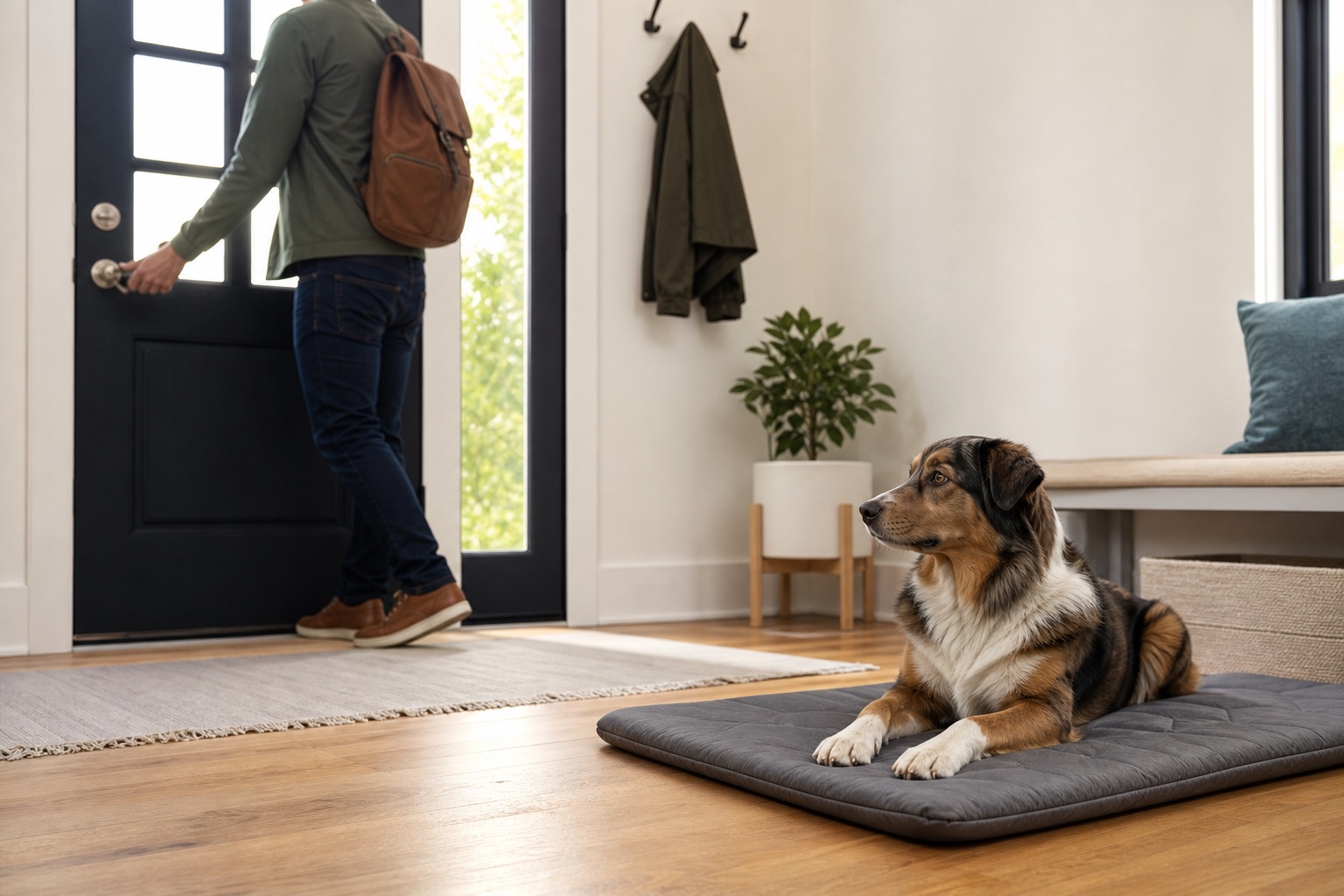
Separation anxiety can cause barking, howling, destruction, escape attempts, pacing, drooling, trembling, urination, or defecation around departures. The key is the pattern: symptoms begin during pre-departure cues or soon after the person leaves and improve when the person returns.
The ASPCA separation-anxiety guidance recommends gradual desensitization and counterconditioning. This is not a “cry it out” problem. Repeated panic can make the next absence harder.
Separation anxiety versus ordinary alone-time behavior
A dog who naps after a short protest is different from a dog who attempts to break through a door, injures itself, or remains distressed for the entire absence. A camera is often the most useful first tool because many signs occur after the person leaves.
Record keys, shoes, departure time, vocalizing, pacing, food use, destruction, and recovery. Also note whether the dog is comfortable alone in another room while you remain home; that is related information but not a complete diagnosis.
Signs that deserve attention
- Panic at keys, shoes, coats, or departure routines
- Barking or howling that begins soon after leaving
- Scratching doors or windows, escape attempts, or broken teeth/nails
- House-soiling only or mainly when alone
- Heavy drooling, trembling, pacing, or inability to eat
- Destruction focused on exits or objects carrying the person's scent
Medical problems, noise phobia, confinement distress, and generalized anxiety can look similar. Ask your veterinarian for help with the differential.
Management before training
Training cannot progress if the dog panics repeatedly. Use a trusted sitter, family member, daycare that the dog enjoys, remote work, or shorter errands where practical. Avoid using a crate as the automatic solution: the Humane World separation-anxiety guidance warns that confinement can add stress for some dogs.
Provide safe enrichment only if the dog can use it calmly. A food toy ignored during an absence may be evidence of distress, not stubbornness. Keep departures and returns quiet and predictable.
A gradual alone-time plan
Find the starting point
Use a camera and identify a duration at which the dog remains relaxed. It may be only a few seconds. If keys trigger panic, begin with picking up keys and sitting down rather than opening the door.
Practice below the panic threshold
Repeat short absences that end before distress. Vary them rather than making every repetition longer: three seconds, five seconds, two seconds, then eight seconds. Increase only when the dog remains relaxed across repetitions.
Generalize carefully
Change one cue at a time: different door, different time, different clothing, or a slightly longer absence. If the dog vocalizes, paces, or stops eating, return to an easier duration.
Make the plan measurable
Use a simple log with the departure cue, starting duration, the first sign of stress, food interest, and recovery time. A camera is valuable because a dog may appear calm when you leave but begin pacing after a delay. Look for patterns across several easy sessions rather than judging one difficult day.
Keep the starting absence below the point where the dog shows distress. Some dogs need to begin with a person stepping behind an interior door for one second; others can manage longer. There is no benefit in choosing a round number if the dog is already panicking at the first step.
Departure-cue practice
Pick one cue such as keys, a coat, a bag, or shoes. Present it without leaving: pick up the keys, feed calmly, and sit down. Repeat until the cue no longer predicts an immediate absence. Work with one cue at a time and stop if the dog begins pacing, panting, following urgently, or refusing food.
Then practice tiny absences through a door. Return before distress, wait for calm, and vary the repetitions so the dog does not learn that every absence becomes longer. Progress may be seconds at a time. If a real-world errand is unavoidable, use management rather than turning it into a training test.
Distinguish it from potty-training regression
House-soiling only when a dog is left alone can fit separation-related distress, especially when it appears with exit-focused destruction or vocalization. Accidents that happen when people are home may instead involve incomplete training, schedule changes, illness, or another cause. Do not diagnose from the accident alone; speak with a veterinarian and use potty training for ordinary routine questions.
Veterinary and professional treatment
Moderate or severe separation anxiety often needs a behavior plan designed by a qualified professional. A veterinarian can rule out medical contributors and discuss whether medication is appropriate; medication is not a shortcut, and it should never be started without veterinary guidance.
Look for a veterinary behaviorist, certified applied animal behaviorist, or behavior consultant with documented separation-anxiety experience. A trainer who promises a fast fix, recommends flooding, or treats panic as defiance is not a good fit.
What not to do
- Do not punish destruction after returning home.
- Do not repeatedly leave for long periods to “teach independence.”
- Do not force a dog into a crate if confinement increases panic.
- Do not hide a departure cue while making the dog guess what will happen.
- Do not use aversive devices to suppress barking or howling.
Prevent accidental setbacks
Do not increase duration because the previous repetition went well once. Look for several relaxed repetitions and vary the duration before moving up. Keep departures, arrivals, and camera checks boring and predictable. If the dog shows distress, stop increasing the plan and return to the last easy step rather than trying to “make up” progress later.
FAQ
How do I know if my dog has separation anxiety?
Video the dog during an absence and look for a consistent departure-linked pattern. A veterinarian or behavior professional should make the assessment, especially when there is injury, severe panic, or medical uncertainty.
Should I ignore separation anxiety?
No. Ignore-and-wait advice can expose a panicked dog to repeated distress. Manage absences and build duration gradually.
Can a crate fix separation anxiety?
Not by itself. Some dogs relax in a crate; others panic more. Use the setup that keeps the dog safe and below threshold.
How long does treatment take?
There is no universal timeline. Progress depends on starting severity, management, health, training consistency, and whether professional support or medication is needed.
Related guides
- Why dogs dig and how to stop it — distinguish ordinary digging from escape attempts linked to distress.
- Why do dogs howl?
- Dog whining and whimpering
- Crate training a puppy