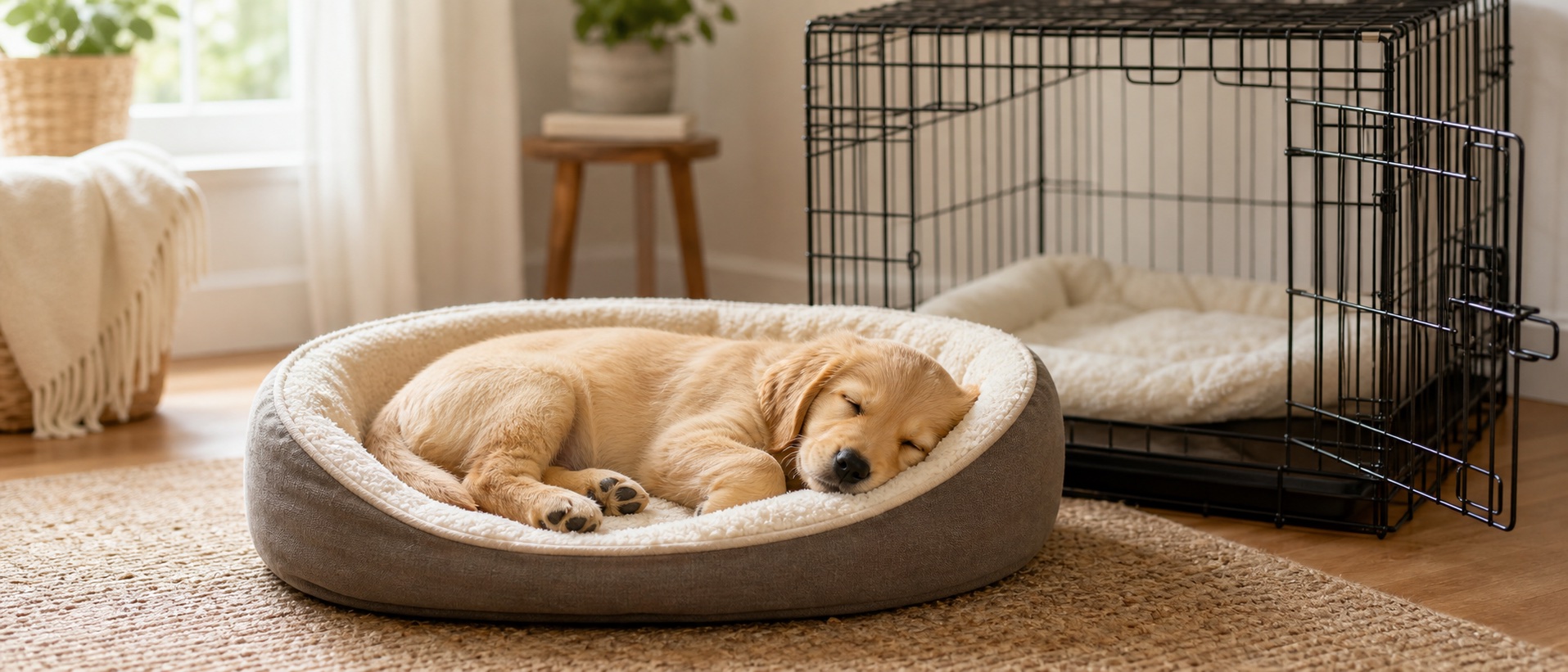
If your puppy seems sweet at breakfast and turns into a tiny land shark by evening, the missing ingredient may not be more exercise. It may be sleep.
A useful puppy sleep schedule does not force every puppy into the same timetable. It helps you notice when your puppy is ready to rest, makes naps predictable, and prevents the frantic cycle in which an overtired puppy becomes too wound up to settle.
Young puppies often sleep about 18 to 20 hours across a full day, including naps. The American Kennel Club's puppy-sleep guidance explains that this extensive sleep supports a puppy's developing brain, body, and immune system.
Older puppies may sleep less. VCA Animal Hospitals notes that some older puppies sleep roughly 10 to 14 hours, with normal needs varying by age, activity, environment, and the individual dog. These ranges are planning guides—not a diagnosis or a promise that every puppy will match the same number.
A simple rhythm works better than a minute-by-minute chart:
- Wake and go outside.
- Eat, train, explore, or play briefly.
- Go outside again.
- Wind down in a quiet, comfortable place.
- Sleep, then repeat based on your puppy's signals.
Puppy sleep needs by age
No veterinary source provides a precise sleep prescription for every week of puppyhood. Growth rate, breed size, health, stimulation, and temperament all affect the answer. Use the following as a flexible planning reference.
Eight to twelve weeks
At this age, much of the day may be sleep. Awake periods are often short and filled with eating, toileting, gentle play, social contact, and learning. After an exciting activity, your puppy may need help reaching a quiet space before becoming frantic.
Night waking is also normal. A very young puppy may need one or more toilet trips and reassurance while adjusting to a new home. Keep nighttime trips calm and boring: outside, quiet praise for toileting, then back to bed.
Three to six months
Naps still matter even when the puppy looks more energetic. Teething, training, walks, visitors, and new environments can be tiring. Many puppies begin staying awake longer but still benefit from scheduled quiet periods after activity.
Judge the schedule by behavior. If your puppy is learning well, eating normally, waking readily, and settling with support, the rhythm is probably useful. If every evening ends in wild biting, barking, or zooming, try an earlier wind-down rather than adding another intense play session.
Six to twelve months
Adolescent dogs may resist rest because the world is interesting, not because they no longer need sleep. Keep a consistent bedtime and protect at least a few quiet periods during the day. A busy adolescent may nap less on an exciting day and recover with more sleep afterward.
Large and giant breeds mature more slowly, but size alone cannot tell you the correct number of sleep hours. Track your own dog's energy, recovery, health, and ability to settle.
After the first year
As your puppy approaches adulthood, the day usually becomes less nap-heavy. Continue offering undisturbed rest after exercise, training, travel, daycare, or unusually stimulating events. Sleep needs can rise temporarily during illness or recovery, so a sudden change should be interpreted in context.
Why puppies need so much sleep
Sleep is not time stolen from training. It is part of learning. A rested puppy is more able to notice cues, regulate play, and recover from new experiences. Sleep also supports physical growth and immune function.
That is why “wear the puppy out” can backfire. Exercise and enrichment are essential, but endless stimulation can create a puppy who is exhausted and still unable to switch off.
The AKC makes the connection especially clear in its puppy-biting advice: “Sometimes a biting puppy is really an overtired puppy.” If biting rises late in an awake period, rest may be more useful than another correction or game.
Is your puppy overtired or under-exercised?
The behaviors can look similar. Use the pattern around the behavior, not one isolated moment.
Signs that point toward overtiredness
- Frantic biting or grabbing after an active period
- Zooming that looks disorganized rather than playful
- Barking, whining, or pawing while unable to settle
- Suddenly forgetting familiar cues
- Becoming more intense as you add stimulation
- Falling asleep quickly once the environment becomes quiet
Signs that may point toward unmet activity needs
- Restlessness soon after a good nap
- Repeatedly seeking an appropriate game or sniffing opportunity
- Calm interest in training, food puzzles, or exploration
- Settling more easily after a short, age-appropriate activity
When you are unsure, start with a toilet break and a brief calm activity such as sniffing or two minutes of easy training. Then offer rest. Do not use hard exercise to “test” whether a very young puppy is tired.
Build a puppy nap schedule that works
A puppy nap schedule should create opportunities for sleep without turning rest into a struggle.
Follow events before following the clock
Offer a nap after eating, toileting, play, training, visitors, a short outing, or any new experience. The AKC notes that young puppies may nap frequently, with individual naps ranging from about 30 minutes to two hours. Your puppy's pattern matters more than hitting an exact duration.
Use the same wind-down sequence
Predictability reduces decision-making. Try:
- A calm toilet trip
- Dimmer lights and less household activity
- Water available as normal
- A safe chew if your puppy can use it calmly
- The same quiet phrase, such as “rest time”
- A comfortable bed, pen, or positively trained crate
If you use a crate, build the association separately with the crate-training guide. Do not place a distressed puppy inside and assume exhaustion will teach comfort.
Protect sleep from interruptions
Children, visitors, and other pets should leave a sleeping puppy alone. Choose a location away from constant foot traffic while keeping very young puppies close enough for supervision. A puppy who wakes for every sound may need a quieter setup, white noise at a safe volume, or a visual barrier.
Keep a three-day sleep log
Write down wake time, nap starts, nap ends, meals, toilet trips, intense biting, and bedtime. Patterns often appear quickly. The purpose is not to chase a perfect total; it is to see whether difficult behavior repeatedly occurs after long awake periods or whether naps are being interrupted.
Create a calm puppy bedtime routine
Begin winding down before your puppy is wild. Reduce exciting play, offer a toilet trip, and move to the sleep area. Keep the order similar each night.
For a puppy's first nights, Dogs Trust recommends keeping the bed close enough to provide reassurance, then moving it gradually if you want the permanent sleep location elsewhere. This approach lets you hear genuine toilet needs without leaving a newly separated puppy to panic.
What time should a puppy go to bed?
There is no universal bedtime. Choose one that fits the household and allows a final toilet opportunity. Consistency is more useful than choosing a fashionable hour. If your puppy wakes extremely early, review daytime naps, evening stimulation, bedtime toileting, and whether the sleep area becomes noisy or bright at dawn.
Should puppies sleep in a crate?
A crate can be a safe sleep option when it is appropriately sized, comfortable, and introduced through positive training. It is not mandatory, and it should not be used for excessive confinement or punishment. A pen or puppy-proofed area may suit some puppies better.
What if your puppy cries at night?
Pause and assess. A young puppy may need the toilet, feel frightened, be too hot or cold, or be experiencing discomfort. Take the puppy out calmly if a toilet break is plausible. If toileting is not needed, offer quiet reassurance without turning the night into playtime.
Persistent panic, escape attempts, drooling, self-injury, or distress linked specifically to being alone is not a sleep-schedule problem. Use the separation-anxiety guide and speak with your veterinarian or a qualified behavior professional.
Coordinate sleep with food and potty training
Sleep, meals, and bathroom needs influence one another, but each topic deserves its own plan.
- Take your puppy outside soon after waking. The puppy potty-training schedule explains how to use waking, eating, drinking, and play as bathroom cues.
- Keep meals measured and reasonably predictable using the puppy feeding schedule.
- Avoid deliberately restricting water to force longer sleep unless your veterinarian has given specific medical instructions.
- Expect temporary disruption after a move, vaccination visit, exciting outing, illness, or major routine change.
Common puppy sleep problems
My puppy will not nap
Check the environment first. Move to a darker, quieter space; reduce interaction; confirm the puppy has toileted; and offer a familiar rest cue. If the puppy repeatedly becomes distressed in a crate, work on crate comfort outside nap time rather than forcing longer confinement.
My puppy sleeps all day and plays at night
Do not keep a young puppy awake for hours to “reset” the schedule. Add gentle daylight, social contact, meals, sniffing, and brief training during normal daytime wake periods. Keep nighttime interactions quiet. Shift the rhythm gradually.
My puppy bites before every nap
End active play earlier, keep hands away from the mouth, and offer an appropriate toy during the transition. The puppy-biting guide covers bite inhibition and safe responses; the sleep schedule supports that plan but does not replace it.
My puppy snores
Occasional soft snoring can occur, but loud, new, or worsening snoring—especially with labored breathing, pauses, coughing, pale or blue gums, or poor daytime energy—needs veterinary attention.
When sleepiness needs a veterinarian
Normal sleep should still look like normal recovery: your puppy wakes, interacts, eats, toilets, and has periods of appropriate energy. Contact your veterinarian promptly if you notice:
- A sudden, unexplained increase in sleep or lethargy
- Difficulty waking, weakness, collapse, or confusion
- Refusal of food or water
- Vomiting, diarrhea, fever, pain, or a major toilet change
- Labored breathing, repeated breathing pauses, or blue/pale gums
- Restlessness that prevents sleep
- A major behavior change alongside altered sleep
VCA emphasizes looking at sleep together with appetite, play, breathing, and bathroom habits. A schedule can organize a healthy puppy's day; it cannot diagnose illness.
FAQ
How many hours should a puppy sleep?
Young puppies often sleep around 18 to 20 hours across a full day. Older puppies may sleep less, and individual needs vary. Focus on healthy waking behavior and overall patterns rather than forcing one number.
How long should puppy naps be?
Some naps are about 30 minutes; others last two hours or longer. Let a comfortable puppy wake naturally when practical, and watch the whole day's rhythm.
Should I wake my puppy from a nap?
Usually, protect normal sleep. You may occasionally need to coordinate a meal, medication, veterinary instruction, or late-evening routine, but repeatedly interrupting naps can contribute to overtired behavior.
Can a puppy sleep too much?
Possibly, especially if the change is sudden or the puppy is difficult to wake, not eating, weak, breathing abnormally, or showing other illness signs. Ask your veterinarian rather than relying on an online hour chart.
Why does my puppy go wild before bed?
Late-evening zooming and biting can reflect overtiredness, excessive stimulation, unmet toileting needs, or an inconsistent wind-down. Try an earlier calm routine and track what happened before the behavior.