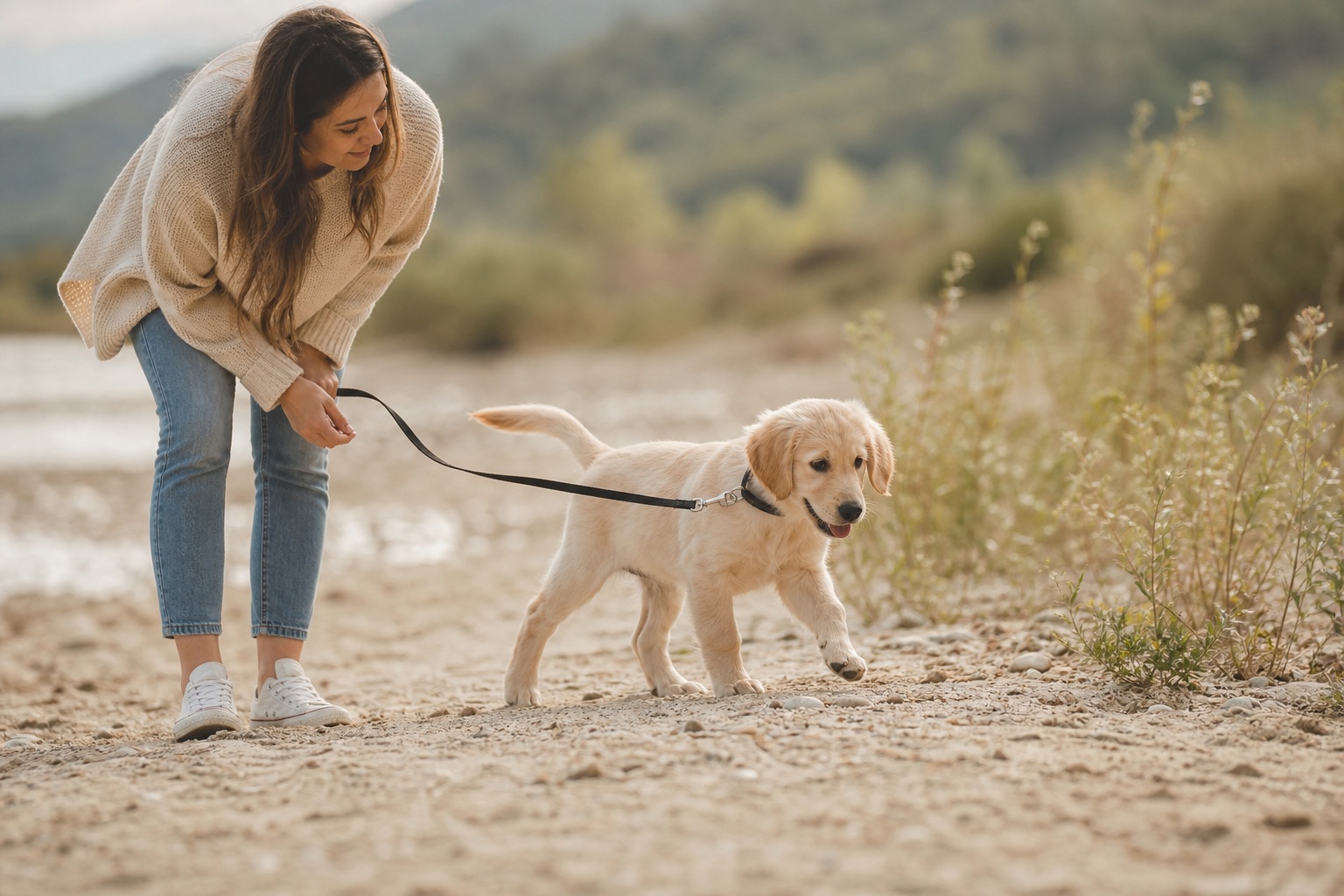
Puppy socialization is the process of giving a young dog carefully chosen, positive experiences with the world. It includes people and dogs, but also elevators, car rides, household sounds, different surfaces, gentle handling, grooming, veterinary equipment, and quiet observation from a safe distance.
The goal is not to make a puppy love every person or play with every dog. The goal is a puppy who can notice something unfamiliar, stay able to eat or think, and recover when the experience ends. The AVSAB position statement on puppy socialization supports safe socialization during the early developmental period while vaccination decisions remain a conversation with your veterinarian.
What puppy socialization really means
Socialization is exposure plus a good emotional outcome. If a puppy is dragged toward a stranger, cornered by an exuberant dog, or flooded with a loud environment, the puppy has had an experience—but not necessarily a useful socialization experience.
Let the puppy choose distance whenever possible. Pair a new sight or sound with small treats, praise, or the chance to retreat. A puppy who watches a bus from across the street and then relaxes has learned something valuable even if the puppy never approaches the bus.
Socialization also includes learning how to disengage. A puppy can look at a person, turn back to you, and continue walking. That calm neutrality is often more useful than greeting everyone.
The critical puppy socialization window
Many behavior professionals describe the first weeks of life as especially important for learning what is safe. The exact timing and sensitivity of development vary between individuals, so do not treat a calendar as a deadline or a reason to rush an overwhelmed puppy.
Bring your veterinarian into the plan early. They can explain local disease risk, vaccination timing, and which low-risk environments are appropriate before the puppy has completed its vaccine series. Avoid dog parks, unknown dog feces, and uncontrolled group settings until your veterinarian says they are reasonable.
A safe age-by-age socialization plan
The first days at home
Keep the first experiences small. Let the puppy explore one room, hear ordinary household sounds at a low intensity, walk across safe surfaces, and rest frequently. Introduce a collar, harness, brush, and gentle paw handling with treats rather than restraint.
Create a simple record of what the puppy has experienced and how the puppy responded. This helps you repeat useful exposures without accidentally making every day harder.
Early weeks of exploration
Add one variable at a time: a quiet visitor, a short car ride, a new floor surface, a calm adult dog known to be healthy and socially appropriate, or a view of people from a distance. Keep sessions brief and finish while the puppy is still comfortable.
Building flexibility
Practice the same skill in different places. A puppy who can relax in the living room may need an easier version in a parking lot. Change distance, duration, and distraction separately. Do not make the person, location, noise, and handling all new on the same day.
Ongoing social learning
Socialization does not stop when a puppy reaches a particular age. Continue rewarding calm observation, cooperative handling, safe travel, and appropriate play. Adolescence can bring new sensitivity, so return to easier versions when the puppy's confidence changes.
What to socialize a puppy to
Build a balanced list rather than chasing a large number of greetings:
- People wearing hats, carrying bags, using canes, or moving differently
- Calm, healthy dogs and appropriate puppy play
- Cars, elevators, stairs, doorways, and different surfaces
- Vacuum cleaners, traffic, alarms, rain, and household appliances
- Gentle ear, mouth, paw, collar, harness, and grooming handling
- Being briefly alone, settling on a mat, and calmly entering a crate
- Veterinary-clinic routines, treats from unfamiliar people, and safe travel
For each item, start far enough away that the puppy can eat and look back at you. Increase only one difficulty at a time.
Signs a puppy is overwhelmed
Stop or make the exercise easier if the puppy freezes, hides, repeatedly backs away, tucks the tail, stops taking food, pants when the environment is not hot, scans constantly, or tries to escape. A single yawn or shake-off can be normal; a pattern of avoidance means the puppy needs more distance or a quieter setting.
Do not label fear as stubbornness. Give the puppy space, allow recovery, and write down what happened. Repeating a frightening exposure at the same intensity can make the response stronger.
Common socialization mistakes
- Forcing a puppy to greet people or dogs
- Treating a dog park as the default socialization plan
- Overloading a puppy with a busy day of new experiences
- Ignoring the puppy's need for sleep and recovery
- Using treats to lure a puppy closer after the puppy has already tried to retreat
- Assuming vaccination advice is identical in every location
- Punishing growling, hiding, barking, or other fear signals
The AVSAB puppy socialization position statement is a useful evidence-based companion, but your veterinarian should make the local disease-risk decision.
When to contact a professional or vet
Ask your veterinarian about sudden behavior changes, signs of illness, pain, or vaccination concerns. Contact a qualified behavior professional if the puppy repeatedly panics, cannot recover after mild exposures, shows intense fear of people or dogs, or begins snapping when frightened.
Choose a professional who explains reward-based methods and works below the puppy's fear threshold. For persistent or severe fear, ask your veterinarian about a veterinary behaviorist or a behavior consultant with relevant credentials.
FAQ
When should puppy socialization start?
Start with safe, low-intensity experiences as soon as your puppy comes home, while coordinating outdoor and dog-contact choices with your veterinarian. Early does not mean rushed.
Can I socialize my puppy before all vaccinations?
Often, carefully controlled exposure can begin before the final vaccine visit, but the safe plan depends on local disease risk and your puppy's health. Ask your veterinarian about clean environments, known healthy dogs, and appropriate classes.
Does my puppy need to greet every dog?
No. Calmly noticing a dog and continuing with you is a successful socialization outcome. Forced greetings can teach a puppy that other dogs are unpredictable or unavoidable.
What if my puppy is already afraid?
Increase distance, stop forcing the exposure, and use a gradual plan. If fear is intense or persistent, involve a qualified behavior professional rather than trying to “get the puppy used to it.”
Related guides
- Reactive dog training — for trigger-based overreaction on walks.
- Dog body language and calming signals — read the signs that a puppy needs more space.
- How to crate train a puppy — for calm confinement as part of a puppy routine.
- Puppy and dog vaccination schedule — what "vaccination decisions" above actually involves.